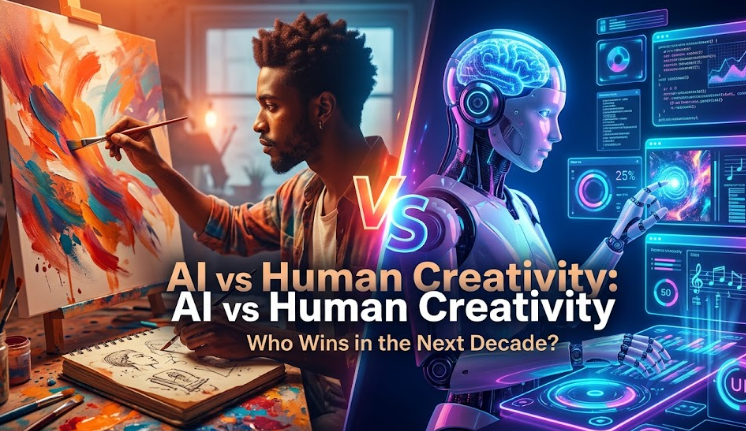
AI vs Human Creativity: Who Wins in the Next Decade? (2026 Guide)
When ChatGPT gained widespread adoption in late 2022, I, as a freelance writer in Chennai, experienced genuine concern about the future of my profession. The prospect of AI generating content instantly, at negligible cost, seemed to threaten the entire creative economy.
Two years later, my income has increased—not because I ignored AI, but because I developed a precise understanding of its limitations. That learning process involved significant trial and error, financial missteps, and eventual clarity.
This analysis of AI vs human creativity moves beyond theoretical discussion. I will share concrete outcomes from attempts to replace human artists with Midjourney and copywriters with ChatGPT, including which tools failed, which workflows succeeded, and what this means for Indian freelancers, small agencies, and startup founders.
Defining Creativity: A Functional Framework
After years of professional creative work, I define creativity as the production of something new, useful, and meaningful—the connection of disparate elements in an original way.
Humans draw from internal, often chaotic sources: personal history, emotional states, cultural context. Machines derive output from patterns identified in vast training datasets.
A critical distinction: Human creativity is intrinsic—it originates from within, independent of external prompting. AI creativity is derived—it recombines existing material. This does not render AI useless; it simply defines its appropriate role.
Implementation Failures: What I Learned the Hard Way
My attempts to fully replace human creativity with AI resulted in instructive failures.
Failure 1: Fully Automated Blog Writing
I configured ChatGPT to generate client blog posts based on previous articles, publishing the output without editing. The content was grammatically correct but lacked distinctive voice. The client's audience detected the shift immediately, with comments describing the content as "robotic" and lacking personality. The client discontinued the engagement within a month.
Lesson: AI can produce coherent text, but it cannot replicate individual perspective, inside jokes, or unique voice.
Failure 2: AI‑Generated Logo for a Chennai Startup
I used Midjourney to create a logo—abstract, modern, and visually appealing. The founder approved it. When attempting to trademark the design, we discovered that under Indian copyright law, AI‑generated works lack clear ownership. Anyone could legally replicate the logo. The startup incurred ₹15,000 and two weeks of lost time before hiring a human designer.
Lesson: Legal and ethical considerations are paramount. AI art is suitable for drafts, internal use, or social media. For branding, packaging, or proprietary assets, human creators remain essential.
Failure 3: AI‑Only Social Media Captions
I generated all social captions via AI for one month. Engagement declined by approximately 40%. Followers noted the content felt "soulless." I had stopped sharing genuine thoughts and was merely distributing AI output.
Lesson: AI is a drafting tool, not a personality substitute. The final output should retain identifiable human fingerprints.
AI Creative Tools I Evaluated and Discontinued
Several widely promoted tools did not justify their cost or complexity for my workflow:
- Jasper.ai – Effective for templated copy (product descriptions, ads) but rigid for long‑form storytelling or brand voice. At $49/month, ChatGPT's free tier delivers 80% of the value.
- Lensa AI – Entertaining for avatar generation, but fundamentally limited to style transfer. Privacy concerns regarding uploaded photos make it unsuitable for client work.
- AIVA (music generation) – Produces competent background music, but tracks lack originality and copyright status for commercial use remains ambiguous.
- Copy.ai – Useful for short‑form content, but repetitive sentence structures become apparent after multiple outputs.
For my purposes, spending 20 minutes writing original copy proved more efficient than 10 minutes correcting generic AI output.
What AI Performs Effectively Today
Despite the limitations, AI offers genuine utility in specific areas. I use it regularly for:
- Overcoming creative block: Generating 10 headline ideas often yields two viable options that spark better original concepts.
- First drafts of routine content: Product descriptions, email follow‑ups, and "we're hiring" announcements—tasks requiring completion but not deep creative investment.
- Research summarization: Condensing lengthy reports saves approximately 30 minutes weekly.
- Visual exploration: Midjourney excels at generating mood boards and style variations before engaging a human designer for final execution.
- Basic code assistance: GitHub Copilot helps with small scripts, reducing reliance on freelance developers for minor tasks.
The pattern is consistent: AI enhances quantity, speed, and exploration. It struggles with quality, ownership, and emotional resonance.
Strengths of Human Creativity (Where AI Falls Short)
After extensive testing, several domains remain firmly human:
- Authentic emotion: I wrote an "About Us" page after a two‑hour founder interview. The narrative captured his struggle—starting a Pune handicrafts business with ₹5,000, overcoming familial skepticism, and the emotional impact of his first order. AI cannot access or convey such lived experience.
- Cultural nuance: AI might write "we value our customers." A human writer in India knows to reference local festivals, regional humor, or Bangalore traffic—elements that build genuine connection.
- Original paradigm shifts: AI remixes existing patterns. Every significant art movement, genre, or conceptual breakthrough originated from a human who deliberately broke established rules.
- Productive imperfection: Many of my best ideas emerged from typos, accidents, or tangential conversations. AI optimizes for correctness, often eliminating serendipity.
- Authentic voice: Your unique perspective—shaped by personal history, struggles, and idiosyncrasies—cannot be convincingly simulated.
Side‑by‑Side Comparison: AI vs Human Creativity
| Criterion | AI Creativity | Human Creativity |
|---|---|---|
| Speed | Seconds to minutes | Hours to months |
| Originality | Recombines existing patterns | Can invent new paradigms |
| Emotional depth | Simulates, does not feel | Authentic, lived experience |
| Cost per output (India) | ₹0.10 – ₹10 per image/article | ₹500 – ₹50,000+ |
| Scalability | Infinite outputs | One output at a time |
| Cultural nuance (Indian context) | Often misses sarcasm, local references | Natively understands festivals, languages, humor |
| Legal ownership (India) | Gray area – no clear copyright | Full ownership, trademark/copyright eligible |
Recommended Hybrid Workflow for Creatives (2026)
After extensive trial and error, this workflow delivers optimal results for my freelance clients:
- Step 1 – Idea generation (AI assisted): Request 20 headline ideas or 10 angles from ChatGPT. Use none directly; allow them to trigger better original concepts.
- Step 2 – Research and outlining (AI + human): AI summarizes competitor content and extracts data. I add personal experiences, Indian client case studies, and unique insights.
- Step 3 – First draft (human first): I write the core narrative—emotional sections, storytelling, and conclusions—without AI involvement.
- Step 4 – Editing and polishing (AI as assistant): I submit my draft to ChatGPT for grammar corrections, sentence shortening, or alternative phrasing. I manually approve each change.
- Step 5 – Visuals (AI for exploration, human for final): Midjourney generates concept art or mood boards. A human designer (from Fiverr or local talent) creates the final, legally ownable asset.
This workflow is slower than pure AI generation. However, output quality is demonstrably higher, clients pay premium rates, and I avoid the ethical and legal pitfalls of unedited AI content. For those interested in scaling this approach, my guide on building AI workflows without coding provides additional structure.
Cost Analysis in Indian Rupees
Experimentation with AI creativity does not require substantial capital. Here is the actual cost breakdown for Indian freelancers and small businesses:
- Free tier (adequate for testing): ChatGPT free, Claude free, Leonardo.ai free (25 generations/day), Canva free (includes AI features). Total: ₹0.
- Light user (solo creator): ChatGPT Plus $20 (₹1,700) + Midjourney basic $10 (₹850) + Canva Pro ₹1,200/month = ₹3,750 + GST ≈ ₹4,400/month. This is less than one client project fee.
- Small agency (3–5 people): Team plans for ChatGPT, Midjourney, and design tools range from ₹10,000–₹15,000/month. Still less than hiring one full‑time junior designer.
My first‑year AI tool expenditure was approximately ₹8,000—less than the cost of ineffective online courses. The return on investment: roughly five hours recovered weekly. At a conservative rate of ₹500/hour, that represents over ₹10,000 in monthly value.
Is AI Creativity Worthwhile for Indian Professionals?
The answer depends on context.
Yes, if: You are a content marketer for a Mumbai e‑commerce brand, where AI can draft product descriptions, social captions, and basic blog posts. Your role shifts from "writing" to "curating and editing," which is a positive evolution. Tools like those discussed in my article on hidden AI tools for business automation can accelerate this transition.
Yes, if: You are a Delhi wedding photographer. AI assists with background removal, color correction, or album layout drafts. But clients hire you—your eye, personality, and ability to capture genuine emotion. AI cannot replace that.
Yes, if: You are a student or recent graduate. Proficiency with AI tools is becoming as essential as Microsoft Excel was in 2005. Ignoring them reduces employability.
No, if: You are a fine artist selling original paintings or a poet performing at open mics. AI is largely irrelevant to your core value proposition. Your audience seeks you, not technical perfection.
For most Indian small businesses and freelancers, the optimal approach is hybrid: leverage AI for repetitive, low‑stakes tasks while preserving human cognitive resources for strategy, emotion, and relationships. This dynamic is a key component of how small businesses use AI to compete with larger companies.
Indian Case Studies: Success, Failure, and Mixed Results
Success: Bangalore Social Media Agency
A friend uses ChatGPT to draft 30 Instagram captions in 10 minutes, then spends an hour adding personal voice, local references, and inside jokes. Engagement increased, and the agency grew from 5 to 12 clients in eight months.
Failure: Chennai D2C Brand
A direct‑to‑consumer brand replaced their human copywriter with AI for all communications—emails, website copy, and ads. Sales declined 25% over three months. Customers described the brand as "robotic." Rehiring the human copywriter (at a higher rate) reversed the decline within two months.
Mixed Result: Ebook Visuals
I used Midjourney to generate all visuals for a client's ebook. The images were striking, but we could not secure copyright protection. The client intended to sell the ebook, and anyone could legally replicate the images. We replaced 50% of the visuals with licensed stock photography and commissioned an illustrator for the remainder.
The Future: Collaboration, Not Replacement (2026–2030)
Based on daily use of these tools, I anticipate the following developments:
- AI will manage volume. The 80% of creative work that is formulaic or low‑stakes will be fully automated—product descriptions, basic social posts, stock imagery.
- Humans will manage meaning. Strategy, emotional storytelling, brand voice, cultural relevance, and original concepts will command premium rates.
- New roles will emerge. Prompt engineer, AI creative director, AI ethics consultant, and hybrid artist‑technologist positions are already appearing on freelance platforms.
- "Human‑made" will become a premium designation. Similar to organic food or handmade crafts, authentically human‑created work will be valued for its rarity. This shift aligns with broader trends I've discussed in how AI is reshaping careers in 2026.
The professionals who thrive will be those who master AI as a tool while amplifying their uniquely human attributes.
Actionable Strategies for Indian Creatives
Whether you are a writer, designer, marketer, or artist, consider these steps:
- Develop AI tool literacy now. Dedicate two hours this week to exploring ChatGPT, Midjourney, or Canva's AI features. Ignorance is a career liability.
- Amplify your unique voice. Share personal stories, unconventional opinions, and documented failures. AI cannot convincingly replicate this.
- Build a personal brand. Clients hire individuals, not algorithms. I began sharing my "AI failure stories" on LinkedIn and received three client inquiries last month from that content alone.
- Offer "human‑reviewed" or "human‑curated" services at a premium. Clients will pay for quality assurance and authenticity.
- Commit to continuous learning. The creative landscape will shift multiple times this decade. Adaptability is your most durable asset.
Conclusion: The Enduring Value of Human Meaning
Neither AI nor human creativity "wins" in a binary sense. AI will generate an unprecedented volume of creative output—billions of images, articles, and songs. Most will be forgettable. Some will be useful. Very little will be genuinely moving.
Human creativity—flawed, emotional, unpredictable, and authentic—will become increasingly valuable. In a landscape saturated with AI‑generated content, audiences will gravitate toward genuine connection: the artist who paints with their hands, the writer who shares vulnerability, the musician who embraces imperfection.
Do not fear AI. Learn to use it for the tasks that don't require your unique perspective. Then invest your creative energy where it matters most. That is how you remain indispensable.
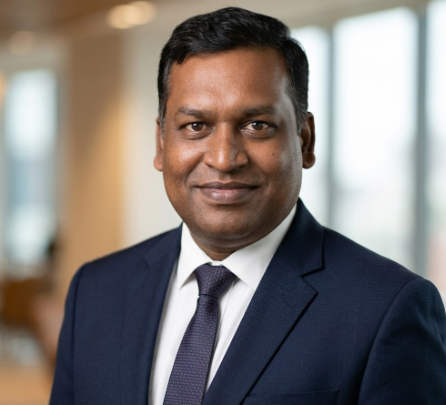
— T Charles Philip, Chennai
Frequently Asked Questions
1. Can AI be considered genuinely creative, or is it merely copying?
Current AI lacks consciousness or intention. It identifies and recombines patterns from training data with remarkable efficiency—a sophisticated form of remixing. Whether this constitutes "creativity" is a philosophical question. Practically, AI cannot invent a new artistic movement or express genuine emotion at present.
2. Will AI replace human artists and writers in India?
Formulaic, high‑volume roles—such as writing product descriptions for extensive catalogs or generating basic social graphics—face significant disruption. However, creators offering unique voice, cultural understanding, strategic insight, and emotional depth will remain in demand. As AI content proliferates, authentic human work may appreciate in value.
3. What is the copyright status of AI‑generated work in India?
Under current Indian copyright law, works generated by AI without substantial human input are not eligible for protection. The "author" must be human. If you use AI as a tool and contribute significant creative input (editing, arranging, selecting), the final work may be copyrightable, but the AI‑generated components alone are not. This remains a legal gray area; consult qualified counsel for commercial projects.
4. Which creative fields are least vulnerable to AI disruption?
Fields requiring physical creation, live performance, deep interpersonal engagement, or high‑stakes originality are relatively insulated. Examples include live theater, stand‑up comedy, fine art painting, art therapy, investigative journalism, high‑end branding strategy, and any role where the client compensates for your specific perspective rather than a generic output.
5. What skills should creatives prioritize in 2026?
Prompt engineering, AI tool literacy (ChatGPT, Midjourney, Canva AI), creative direction (curating and refining AI output), emotional intelligence, storytelling, and hybrid analog‑digital techniques. Basic legal awareness regarding AI and copyright is also valuable. The ability to evaluate AI output and improve it will be a distinguishing competency.
6. How can I use AI without sacrificing my unique voice?
Use AI for drafts, research, or overcoming creative block—never for final output without substantial revision. Write the core emotional content yourself. Incorporate personal anecdotes, local references, and distinctive quirks. Then employ AI as an editor ("fix grammar" or "suggest alternatives"). The most effective AI‑assisted work remains approximately 80% human and 20% AI.
Related Articles
All articles →
How Small Businesses Use AI to Compete with Big Companies (2026 Guide)
Practical AI strategies for Indian small businesses to level the playing field against larger competitors. Real tools, costs in INR,…
Build AI Workflows Without Coding: A 2026 Guide for Indian Businesses
Learn to automate repetitive tasks using no-code AI tools like Zapier and ChatGPT. Practical steps, real costs in INR, and…
Hidden AI Tools for Business Automation in India (2026 Guide)
Discover underrated AI automation tools that save time and money for Indian freelancers, small businesses, and agencies. Honest reviews with…